 Mel Brooks, who is nigh on his centennial (born on June 28, 1926), is the undisputed king of US cinematic parody, a master of the broad stroke and the accurately timed pratfall. Yet, flanking his more bombastic, laugh-a-minute masterpieces like BLAZING SADDLES and YOUNG FRANKENSTEIN, both released in 1974, lie two curious, although less luminous gems: THE TWELVE CHAIRS and SILENT MOVIE, whose underlying spirits and modus operandi are undeniably Brooks’, which, my dear cinephile, is exactly what makes both a side-splitting watch. These films affirm Brooks’ unwavering commitment to unadulterated comedic energy and relentless absurdity, highlighting that even when he is hampered by the genre conventions or strictures of the source material, the destination is always a laugh-filled romp.Let's begin with THE TWELVE CHAIRS, a winsome, slightly unhinged European art-house comedy, which stands as a notable turn for a Mel Brooks production. Based on the classic 1928 satirical novel by Ilf and Petrov, this isn't a parody of a genre; it's an authentic narrative, albeit one laced with Brooks' signature absurdity. Set in post-revolutionary Russia, the film follows Ippolit Vorobyaninov (Moody), a former nobleman turned humble bureaucrat, who discovers that his late mother-in-law has hidden her jewels in one of twelve dining chairs before the revolution. He teams up with the opportunistic con artist Ostap Bender (Langella, surprisingly dashing and mischievous in his film debut), and they embark on a cross-country treasure hunt, constantly thwarted by the conniving Father Fyodor (DeLuise, in a role that skillfully displays his physical comedy).The film's character-driven humor and a notably poignant undertone are particularly pronounced. Moody, fresh after his Oscar-nominated turn in Carol Reed’s OLIVER! (1968), furnishes an exemplary rendition in aristocratic exasperation, his every sigh and exasperated glance a comedic goldmine. Langella, before he would become the intimidating Dracula both on stage and in John Badham’s DRACULA (1979), emerges as a compelling figure as the enticing rogue, providing a grounded counterpoint to Moody's flailing. But it's DeLuise, as the perpetually sweating, chair-obsessed priest, who nearly steals every thunder from his co-stars. His descent into madness, culminating in literal chasing through and shinning up the mountains, is unadulterated physical comedy at its finest. Brooks himself, as the bumbling manservant Tikon, adds another layer of endearing buffoonery.The film's humor is less about rapid-fire gags and more about situational irony, character quirks, and the sheer futility of their quest. It possesses a warmth and a slightly melancholic charm, a testament to Brooks' ability to find humor in human desperation without resorting to cruelty (especially as regards the film’s bullish coda that differs drastically from the novel). The cinematography is beautiful, capturing the vastness and bleakness of the Russian landscape (the real location is in Belgrade), which unexpectedly enhances the comedic despair.For those expecting the relentless barrage of badinage and meta-humor found in BLAZING SADDLES, THE TWELVE CHAIRS might feel a tad slow. Its pace is more deliberate, its humor more observational. Some might find its European sensibility a departure from the more direct American comedic style Brooks is known for. While the character performances are stellar, the narrative, being an adaptation, doesn't allow for the same anarchic freedom that defines his original screenplays. It's an engaging film, but perhaps not one that elicits the same gut-bustingly uncontrollable laughter as his more famous parodies. THE TWELVE CHAIRS stands as a fascinating anomaly. Sandwiched between THE PRODUCERS and BLAZING SADDLES, it affords Brooks the opportunity to flex his muscles as a director of narrative comedy rather than unalloyed parody. It underscores his capacity for crafting well-rounded characters and sustaining a story, signaling he is not a one-trick pony (fast-forwarded sight gags aside). It exemplifies his early artistic ambition, a film that prioritizes character and subtle wit over overt slapstick, laying groundwork for the far more nuanced and idiosyncratic character work seen in YOUNG FRANKENSTEIN.
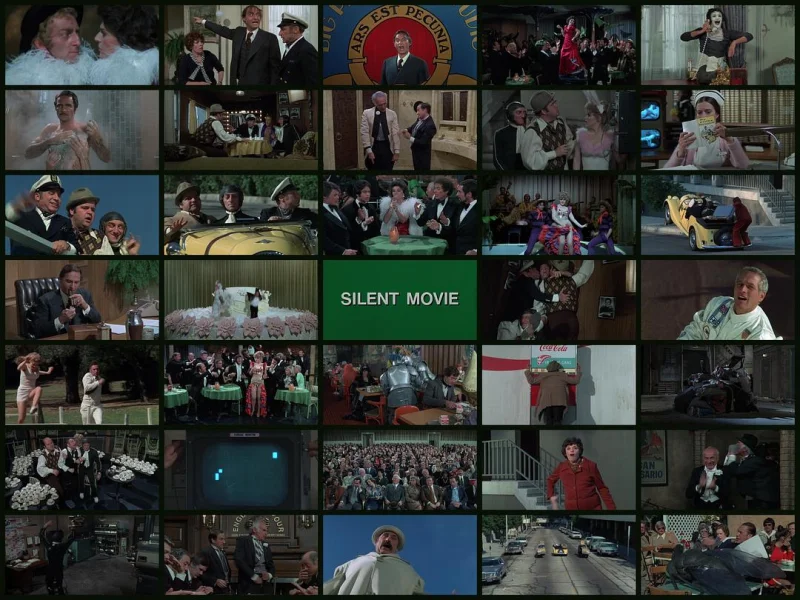
Six years later, Brooks unveils another curveball with SILENT MOVIE. In an era dominated by movies with more intricate sound design, Brooks dared to make a feature-length silent film. The premise is brilliantly simple: Mel Funn (Brooks), a down-on-his-luck film director, proposes to make the first silent movie in forty years to save his ailing studio from an acquisitive conglomerate. The catch? They need"the biggest stars in the world" to appear in it (a self-revealing lampooning of the industry’s blind trust on star power). What follows is a series of escalatingly absurd attempts to recruit Hollywood's elite, all communicated through exaggerated, nonsensical comedic situations. The sheer audacity of SILENT MOVIE stands out as its primary meritThe film is a superb exhibition in physical comedy, with Brooks, DeLuise (again!), and Feldman forming a hilarious trio. Feldman, with his trademark bulging eyes and distinctive expressions, is a total gas who can tickle your funny bone whenever he appears on the screen. Their synchronized movements, their expressive faces, and their accurately timed reactions are a joy to behold. And then there are the cameos: Burt Reynolds in a shower, James Caan inside a tilting trailer, Liza Minnelli in the studio commissary, Paul Newman on an electric wheelchair and Anne Bancroft being.. the fabulous Ms. Bancroft! Each cameo is an expertly crafted, wordless vignette that leverages the star's persona for maximum comedic effect. The single spoken word, uttered by the legendary French mime Marcel Marceau, is nothing if not a stroke of genius, a punchline that lands with seismic force due to the preceding silence.SILENT MOVIE is a film that demands close attention to detail and rewards it with cleverness and charm (Peters, as the alluring showgirl Vilma Kaplan, also graces the screen with her unique ditziness and eyes-catching bravura). While ingenious, the central gimmick of SILENT MOVIE can, for some, wear a little thin over its runtime. The absence of dialogue signifies that the humor relies predominantly on gags dependent on sight, which occasionally can miss their mark (like the Coca-cola vending machine part, or some random jokes impertinent to the plot). It's a film whose plot, while serving its purpose, is secondary to the grand spectacle and the conceptual daring.It is also a love letter to the cinema of yore, a bold artistic statement that demonstrates that Brooks isn’t afraid to challenge conventions, even his own. Coming after BLAZING SADDLES and YOUNG FRANKENSTEIN, it keeps cementing his reputation as a comedic innovator. It underscored his unparalleled capacity for storytelling through stock imagery and anarchic sketches, illustrating that humor doesn't always need words to resonate. It's another farcical, affectionate, and incredibly clever piece that features his boundless creativity and willingness to take risks, even though SILENT MOVIE cannot be hailed as Brooks’ best work.While ambitious in their conceptualizations, THE TWELVE CHAIRS and SILENT MOVIE often feel more like intriguing experiments than fully realized comedic triumphs. They lack the sustained, riotous energy that defines Brooks’ chef d’œuvres,, instead offering a more uneven experience that might leave some viewers craving the signature Brooksian zaniness they’ve come to expect. While they certainly showcase a different facet of his talent, they stand less as essential additions and more as curious footnotes in a career otherwise brimming with undeniable comedic gold, like the catchy, anachronistic theme tune Brooks writes for THE TWELVE CHAIRS,"Hope for the Best, Expect for the Worst".referential entries: Brooks' BLAZING SADDLES (1974, 7.9/10), YOUNG FRANKENSTEIN (1974, 8.1/10), THE PRODUCERS (1967, 7.2/10).
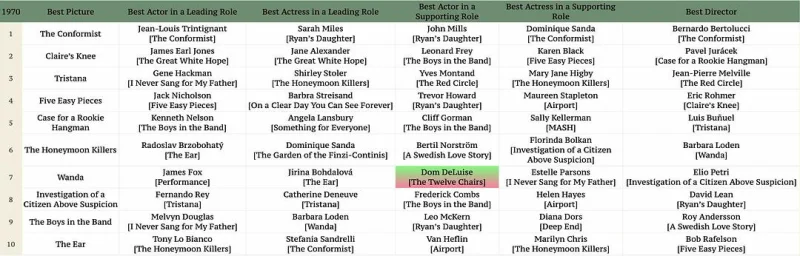
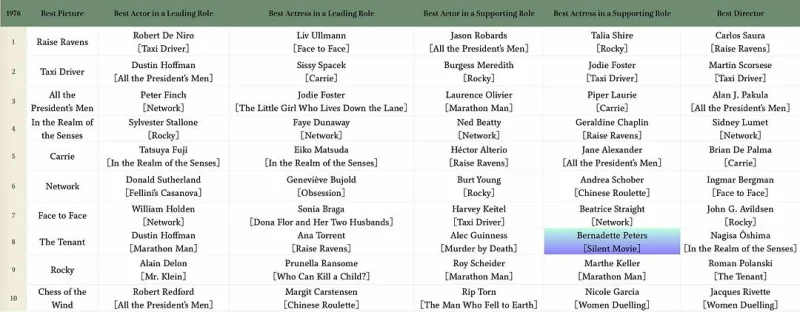
Title: The Twelve ChairsYear: 1970Genre: ComedyCountry: USALanguage: English, RussianDirector/Screenwriter: Mel Brooksbased on the novel by Ilya Ilf and Yevgeni PetrovComposer: John MorrisCinematographer: Djordje NikolicEditor: Alan HeimCast:Ron MoodyFrank LangellaDom DeLuiseMel BrooksAndréas VoutsinasDiana CouplandDavid LanderVlada PetricElaine GarreauRating: 7.3/10Title: Silent MovieYear: 1976Genre: Comedy Country: USALanguage: EnglishDirector: Mel BrooksScreenwriters: Mel Brooks, Ron Clark, Rudy De Luca, Barry Levinson Composer: John MorrisCinematographer: Paul LohmannEditors: Stanford C. Allen, John C. HowardCast:Mel BrooksMarty FeldmanDom DeluiseSid CaesarBernadette PetersHarold GouldRon CareyBurt ReynoldsJames CaanAnne BancroftLiza MinnelliMarcel MarceauPaul NewmanYvonne WilderValerie CurtinFritz FeldLiam DunnHarry RitzCharlie CallasHenny YoungmanCarol ArthurRating: 6.8/10


